

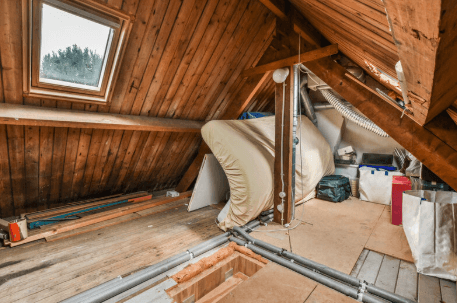
Most people do not think about the attic until something obvious happens inside the house. A ceiling stain appears. Paint begins to bubble. A damp smell lingers after rain. By that point, moisture has often been building for a while.
In many cases, the attic has already been showing signs that something was wrong. Catching those signs early can help you address a roofing problem before it spreads into insulation, framing, or interior finishes. That is one reason many homeowners start looking into roof repair boise as soon as attic conditions seem off.
An attic space can act as a microscope that exposes what is hidden in the other living spaces of your home. A roof appearing in tip-top shape might reveal moisture that’s been quietly collecting beneath the surface. This kind of issue is easily found with routine attic checks. They reveal whether a minor exterior weakness has begun to affect the wood, fasteners, ventilation, or insulation. When you know what to look for, you can spot trouble before it turns into a larger repair.
Damp Insulation Usually Means Moisture Has Been Present More Than Once
Insulation is often one of the first places where hidden roof moisture leaves a clear trace. Dry insulation should feel light and consistent. When exposed to water, it clumps, compresses, or develops darker areas. Even if it dries on the surface, it may no longer perform the way it should.
That matters because insulation is not just for temperature control. It also reflects how air and moisture are moving through the space. If one section looks heavier or matted down, the issue may not be a one-time drip. It can point to repeated exposure to a slow leak, condensation, or moisture entering around a vulnerable roof detail.
Dark Wood Stains Tell a Longer Story Than an Active Drip
Wood decking and framing can retain evidence long before water starts to fall into a room below. Staining on the underside of the roof sheathing often appears as dark patches, uneven discoloration, or water marks that follow the grain. These signs suggest moisture has been entering and drying over time.
This is one reason attic inspections are more useful than waiting for a dramatic leak. Water does not always announce itself with a steady drip. It may enter during certain storms, collect around a fastener, or spread thinly across the decking before evaporating. By the time the problem becomes easy to notice from inside the house, the affected area may be larger than expected.
Rusty Nails and Metal Fasteners Point to Humidity Problems
One of the simplest attic clues is also one of the most overlooked. Nail tips that extend through the decking should not look heavily rusted. When they do, it often means the attic has been holding excess moisture. That moisture may be coming from a roof leak, poor ventilation, or warm indoor air rising into the attic and condensing on cooler surfaces.
Rust does not always indicate serious structural damage, but it does show that the area has remained damp long enough to affect metal. That is something to take seriously. Moisture problems rarely stay in one place. If fasteners are rusting, the same conditions may also be affecting nearby wood, insulation, and air quality.
A Musty Smell Appears Before Visible Damage Gets Worse
A musty smell in the attic is often an early sign of moisture trouble, even before visible damage becomes obvious. If the space smells stale, earthy, or damp, moisture has likely been present for too long. Even without standing water, the area may still be wet enough to encourage mold growth or prevent materials from drying as they should.
People often assume the problem is minor when nothing looks severe. But by the time an odor develops, moisture has usually been there for a while. Smell is often a sign that the problem has lasted, not just appeared. It should be taken seriously, just like a water stain, because it can point to more than a short-term weather issue.
Moisture Does Not Always Stay Near the Entry Point
Water in an attic does not always appear right where it gets in. It can travel before it leaves a mark, which makes leaks harder to trace. By the time you notice a stain or a damp area, the real source could be elsewhere.
That is why surface signs can be misleading. What looks like a small problem might actually be coming from damaged flashing, a vent, or another weak spot above it. In many cases, the stain only shows part of the issue, not the whole thing.
See also: Discover Designer Paws Salon: Stylish Pet Grooming in Upper Arlington and Westerville, OH
Ventilation Problems Can Make Moisture Damage Worse
Some attic moisture problems are not caused by an opening in the roof. In many cases, poor ventilation keeps damp air trapped inside the attic. When warm air cannot escape, condensation can form and collect on wood, nails, and other surfaces. Over time, that buildup can leave behind many of the same signs you would expect from a leak.
That does not mean ventilation is always the only problem. An attic works as a connected space, and moisture can develop from multiple conditions at once. Roofing materials, insulation, airflow, and temperature shifts all play a role. A careful inspection should examine how those factors work together rather than focusing on just one clue.
Early Attention Keeps a Hidden Problem from Expanding
When attic moisture goes unnoticed, the repair often becomes more than a small fix. Wet insulation can lead to marked decking, softer wood, and damage that eventually shows up in the rooms below. Checking the attic early gives you a better chance of catching the problem before it spreads.
Musty odors, rust on nail tips, darkened wood, or insulation that looks packed down are all signs worth paying attention to. They usually point to moisture getting into the attic somewhere. Taking care of it sooner can keep the repair simpler. For homeowners looking at roof repair boise, finding those warning signs early can mean fixing one section instead of dealing with a much larger project.
